Implementing the “Shopping Mall” strategy across TBC’s digital experiences at scale
My role
Platforms Design Lead
What I did
- Turned Shopping mall strategy into practical UX principles for digital products teams
- Set up a validation and measurement plan to track whether the concept improves discovery, speed, and engagement
- Rolled the approach out in phases to drive adoption
Product outcome
- Rework loops in reviews: 6 rounds → 1–2 rounds
- Products activations rate: 6.0% → 7.2%
CONTEXT & OBJECTIVES
TBC’s 2026 strategy described platforms as “shopping malls”: different teams ran different malls, and each feature was a “shop” owned by a specific team. As more services were added, we lacked shared guidance to ensure consistent UX decisions. To address this, I aligned with platform owners and UX leadership on clear objectives and initiated a project to standardize the experience.
- Establish a consistent design vision to maintain as platforms evolve
- Revamp platforms structure to enhance findability and engagement
- Implement changes gradually to foster stability and maintain user familiarity
THE CHALLENGE
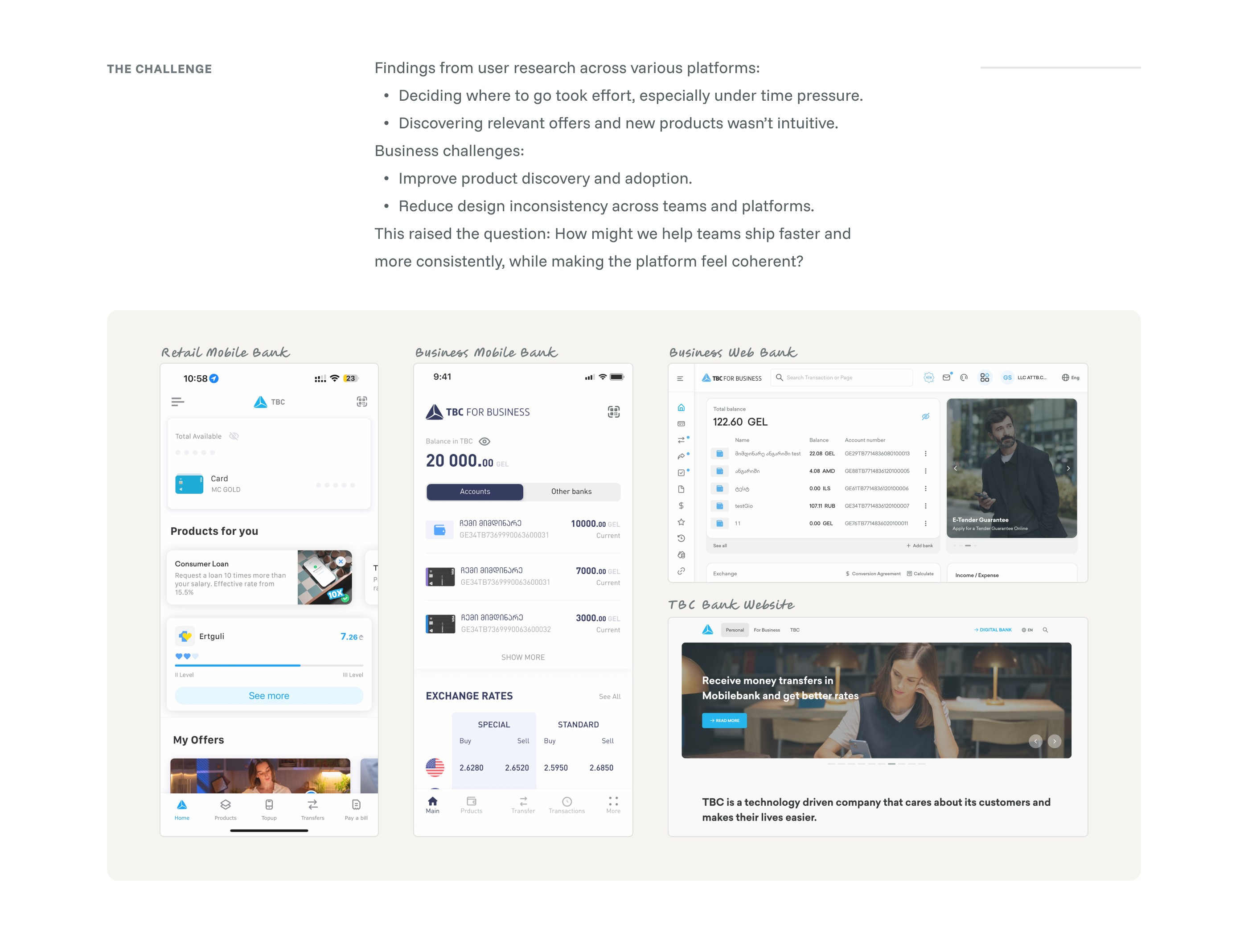
Findings from user research across various platforms: • Deciding where to go took effort, especially under time pressure. • Discovering relevant offers and new products wasn’t intuitive. Business challenges: • Improve product discovery and adoption. • Reduce design inconsistency across teams and platforms. This raised the question: How might we help teams ship faster and more consistently, while making the platform feel coherent?
DESK RESEARCH
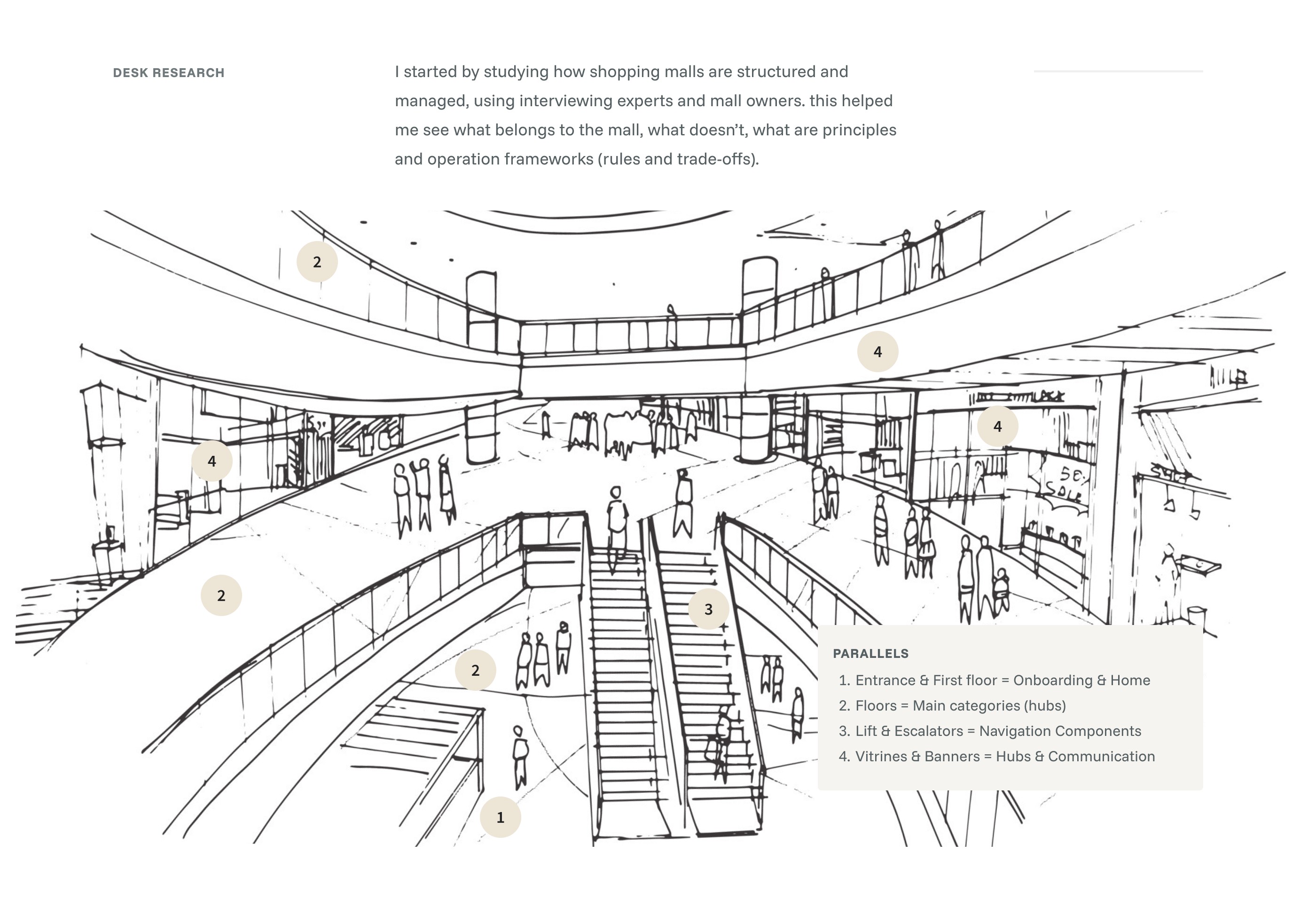
I started by studying how shopping malls are structured and managed, using interviewing experts and mall owners. this helped me see what belongs to the mall, what doesn’t, what are principles and operation frameworks (rules and trade-offs).
SHARED PLATFORM PRINCIPLES
After the analogy research, I realized malls succeed because they establish shared rules for every shop and centrally manage common services. This insight led us to revisit existing principles and introduce new ones to address key gaps, which I developed together with the platform design team.
1. BASELINES
Brand Archetype
Experience Guidelines
2. UX BASELINES
Interaction Patterns
UX Writing Guidelines
Accessibility Guidelines
Design System Foundation
4. COMPONENTS
Shared Mob Library
Shared Web Library
Shared Promo Library
5. PLATFORMS
Retail Digital Bank
Business Digital Bank
TBC Bank Website
Merchant Hub
6. WEB & MOB APPS
Retail iOS Mobile Bank
Retail Android Mobile Bank
Retail Web Bank
Business iOS Mobile Bank
+ 4 More
○ Created During the Project● Needed Revisiting
PLATFORM VS FEATURE OWNERSHIP
Also, I conducted an audit to distinguish which features should be governed centrally by the “shopping mall” and which should belong to individual “shops.” Based on this analysis, I helped teams properly distribute responsibilities and allocate functionalities across the platform.
Onboarding
Login & Profile
Orders & Applications
Settings
Home
Communication
Engagement Widgets
Transactions
Contact
Products
Banking Products
Insurance Products
Apply For New Product
Transfers
Transfer Between Your Accounts
Transfer To Someone Else
Mobile Topup
Bill Payments
Offers
Segment Based Offers
Segment Based Perks
○ Governed by Shopping-mall● Governed by Shops
APPLYING RULES APP WIDE
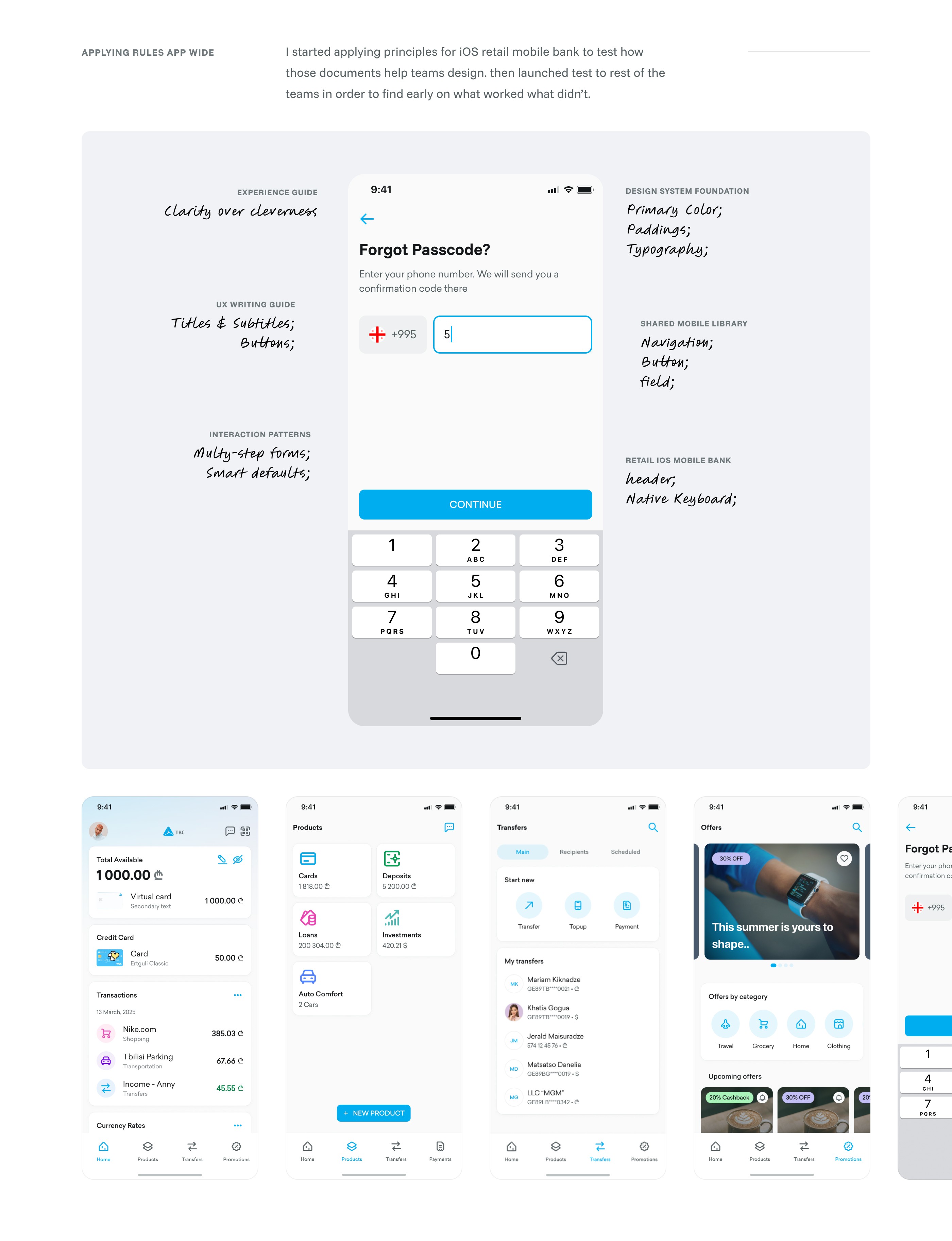
I started applying principles for iOS retail mobile bank to test how those documents help teams design. then launched test to rest of the teams in order to find early on what worked what didn’t.
APPLYING RULES PLATFORM WIDE
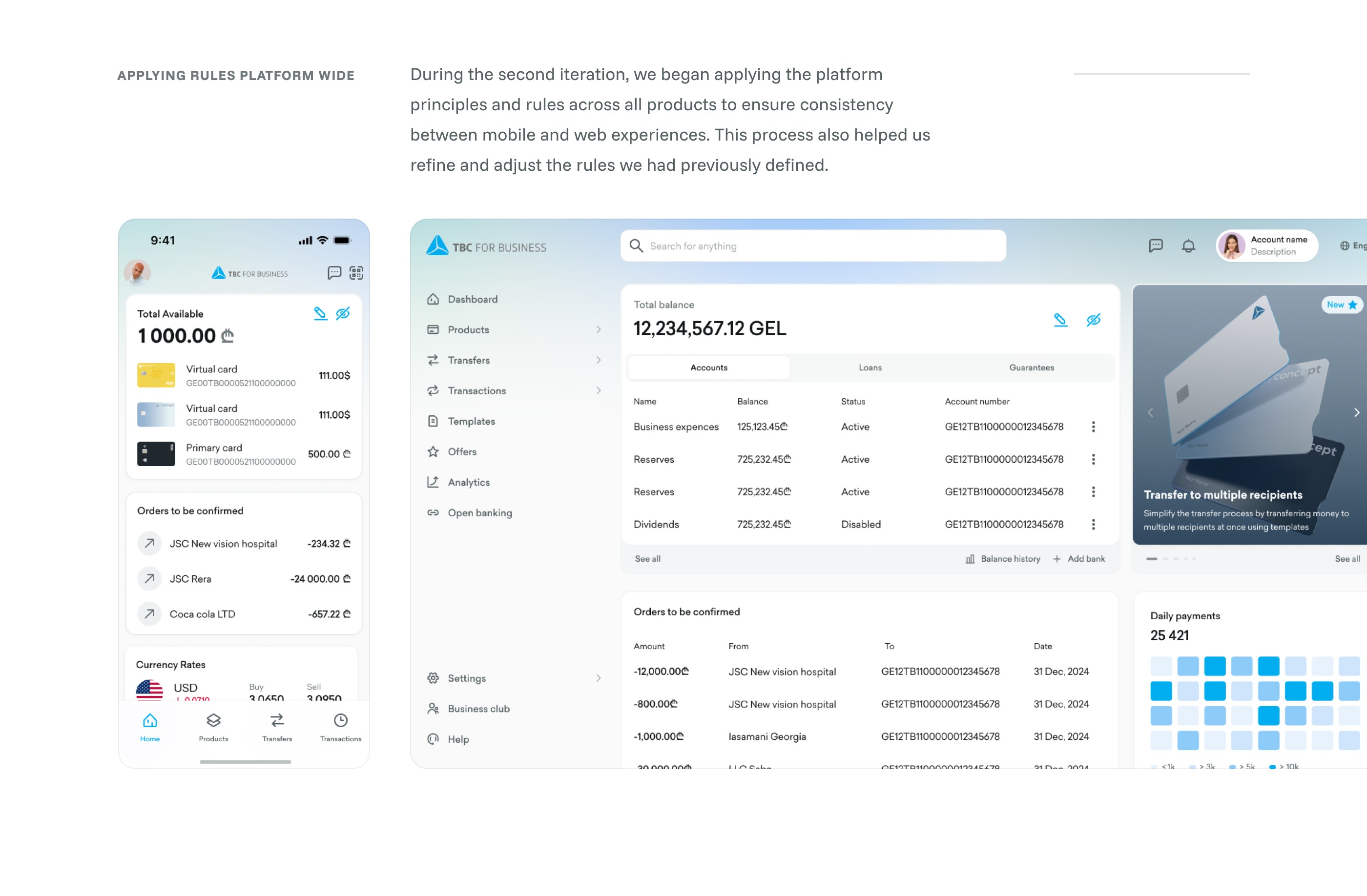
During the second iteration, we began applying the platform principles and rules across all products to ensure consistency between mobile and web experiences. This process also helped us refine and adjust the rules we had previously defined.
BUILDING AI ASSISTANT FOR TEAMS
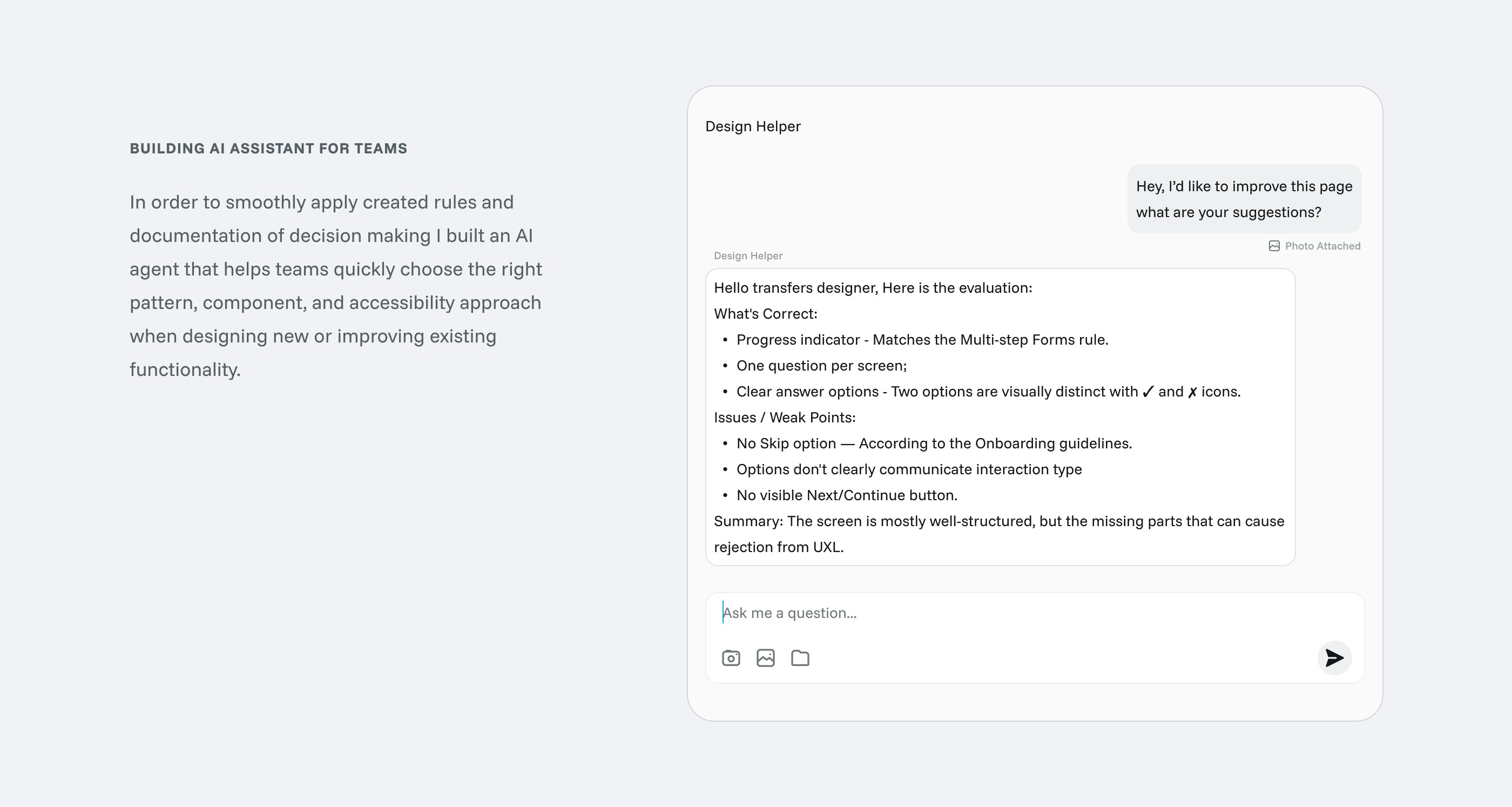
In order to smoothly apply created rules and documentation of decision making I built an AI agent that helps teams quickly choose the right pattern, component, and accessibility approach when designing new or improving existing functionality.
IMPLEMENTATION
To maintain business continuity, we integrated the changes into upcoming features first and addressed any blockers before release. I created tracking lists for each Application (Web and Mob apps) to monitor which features followed the new rules and when they would launch.
| Planned | Team Name | Functionality | Status |
|---|---|---|---|
| Q3, 2025 | Core Team | Onboarding | Done |
| Q1, 2025 | Core Team | Login & Forgot Password | Done |
| Q2, 2025 | Core Team | Home Page | Done |
| Q3, 2026 | Transfers | Between Accounts | To Do |
| Q2, 2026 | Transfers | To Someone Else | In Progress |
| Q4, 2026 | Transfers | Scheduled Transfers | To Do |
| Q3, 2025 | Payments | Top Up Mobile | Done |
| Q4, 2025 | Payments | Bill Payment | Done |
| Q3, 2026 | Payments | Scheduled Payments | To Do |
LEARNINGS
- What worked: treating strategy as a system (journey + IA + reusable moments).
- What I’d improve: earlier lightweight usability validation and sharper success metrics.
- What I learned: context (where the user is) can be a product advantage when it’s actionable.